


Most Australian creatives assume that a few swipes of a paint pen will stay put on any surface, but achieving a flawless finish with posca on plastic requires more than just a steady hand. It's incredibly frustrating to watch your hard work bead up on a greasy surface or crack and peel off a phone case after just a few days. You've likely felt that disappointment when a vibrant colour loses its lustre or fails to grip the smooth texture of an upcycled container. This guide will show you exactly how to master the "DAC" workflow to ensure your artwork stays vibrant and durable. You'll learn how to transform tricky, non-porous surfaces into the perfect foundation for your creativity. We'll cover everything from precise surface preparation to choosing the right genuine markers from PoscART, ensuring your final result is sealed correctly with Australian-tested water-based varnishes.
Key Takeaways
- Master the essential preparation steps, including degreasing and light sanding, to ensure your paint adheres properly to smooth, non-porous surfaces.
- Learn how to choose the right marker tips for posca on plastic projects, from the versatile PC-5M for fills to the ultra-fine PC-1MR for crisp, bleed-free detailing.
- Discover the professional technique for sealing your work with water-based spray varnish to prevent cracking and ensure a long-lasting, vibrant finish.
- Gain the confidence to upcycle everyday plastic items into professional-looking art by understanding the specific drying and curing times required for non-porous materials.
Preparing Plastic Surfaces for POSCA Paint Markers
Plastic is a non-porous material, which presents a unique challenge for artists. Unlike porous substrates like wood or canvas, the water-based paint from your markers sits entirely on top of the surface rather than being absorbed. Because of this, mastering posca on plastic starts with surface tension management. Before you start drawing, identify the plastic type. High-gloss items often need a light scuff to create a "key" for the paint to grip. Results often vary based on factory-applied coatings or the specific texture of recycled materials, so a small patch test is always a smart move. Check out our guide on what surfaces do POSCA pens work on for more context.
Cleaning and Degreasing for Optimal Adhesion
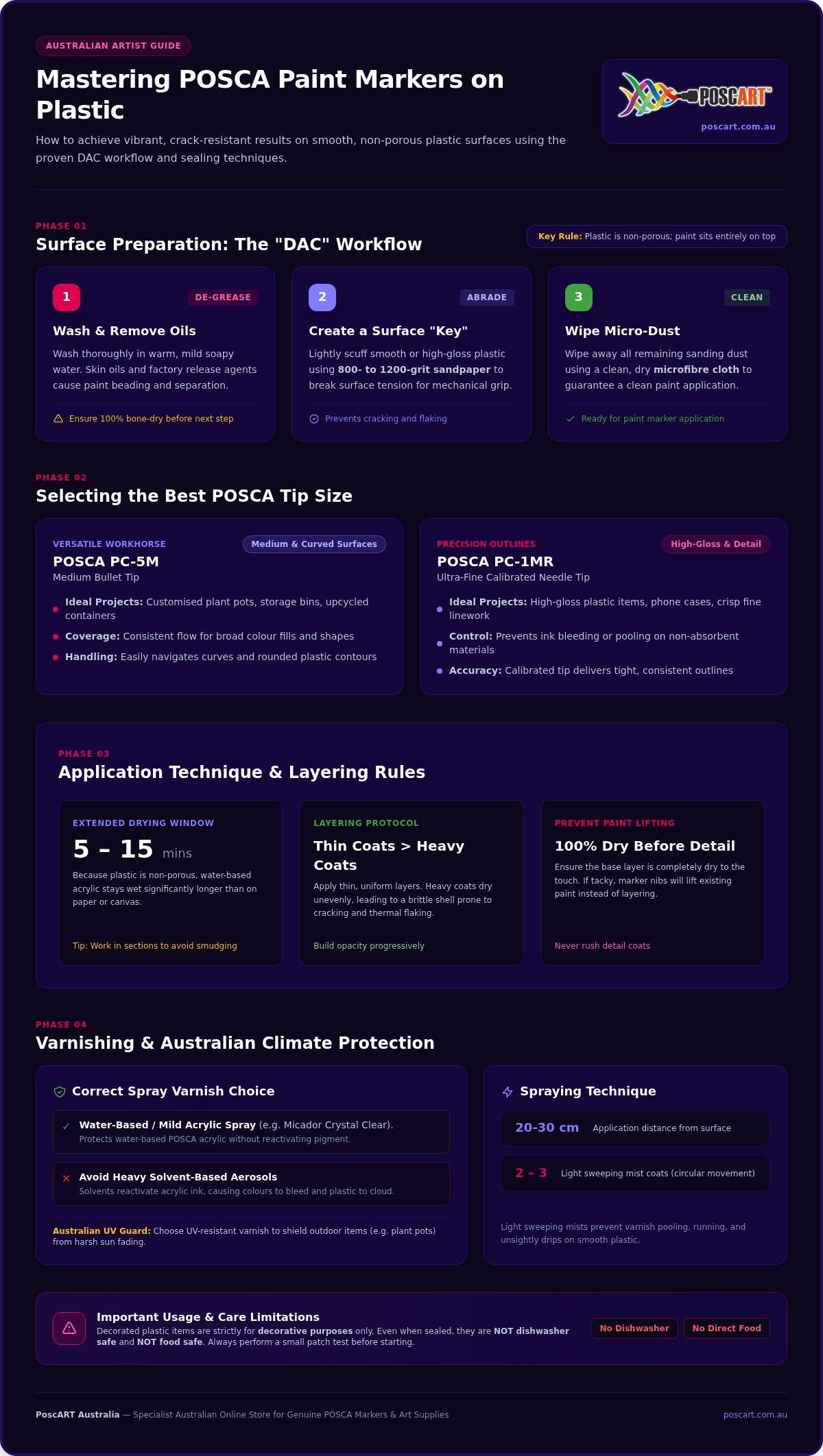
Oils from your skin or factory release agents are the primary causes of paint "beading." To prevent this, follow the Australian "DAC" workflow (De-grease, Abrade, Clean):
- De-grease: Wash the item thoroughly in warm, mild soapy water to remove dust and grease.
- Abrade: Lightly scuff the plastic with 800- to 1200-grit sandpaper to break surface tension.
- Clean: Wipe away micro-dust with a dry microfibre cloth before you begin.
Even a tiny fingerprint can cause the ink to separate. Ensuring the plastic is bone-dry and oil-free is the secret to a professional finish that won't flake off during the application process. At PoscART, we've seen how proper preparation makes the difference when using posca on plastic, turning a simple upcycling project into a durable piece of art.
Creative Application: Choosing the Best POSCA Tips for Plastic
Selecting the right nib is just as important as your surface preparation. For most medium-sized projects, such as customised plant pots or storage containers, the POSCA PC-5M Australia is the versatile workhorse you need. Its medium bullet tip provides consistent coverage and handles curved plastic surfaces with ease. If you're working on high-gloss items where precision is paramount, the PC-1MR ultra-fine tip is a superior choice. Its calibrated needle tip allows for crisp outlines without the risk of ink "bleeding" or pooling, which is a common issue when too much paint is released onto a non-absorbent surface.
Working with posca on plastic requires a steady hand and a different pace than working on paper. Because the material isn't porous, the water-based paint stays wet for longer, typically between 5 to 15 minutes. Rushing your strokes can lead to smudging, so it's best to work in sections. If you're planning a community project or a school upcycling event, you can contact our team for a bulk quote to ensure every student has the right tip size for their design.
Preventing Cracking and Peeling on Smooth Surfaces
Durability depends on your application technique. Always apply thin, even layers rather than attempting to achieve full opacity with one heavy coat. Thick layers of paint often dry unevenly, leading to a finish that's prone to flaking. When you're ready to add details, ensure the base colour is completely dry to the touch. If the bottom layer remains tacky, the nib of your next marker will likely lift the existing paint rather than layering over it. The "cracking" effect is usually due to thermal expansion of the plastic substrate or excessive ink volume creating a brittle, uneven shell. By using genuine markers from PoscART and following these steady steps, your posca on plastic designs will maintain their professional, vibrant look.
Sealing Your POSCA Art for Permanent Results
Once your artwork is finished, the final step is ensuring its longevity. Because POSCA paint is water-based acrylic, it won't naturally bond to plastic in a way that resists friction or moisture. You must apply a protective top coat to prevent your hard work from scratching off. We recommend using a water-based or mild acrylic spray varnish, such as Micador Crystal Clear. Avoid heavy solvent-based aerosols; these can reactivate the paint, causing your colours to bleed or the plastic to cloud.
To achieve a professional finish, use a "circular movement" technique. Hold the can approximately 20 to 30 cm away from the surface and apply two to three light, sweeping mists rather than one heavy layer. This prevents pooling and unsightly drips. While this process makes posca on plastic much more durable, remember that the items are never "dishwasher safe" or "food safe." Only use decorated plastics for decorative purposes and keep them away from direct food contact.
Long-Term Care and UV Protection in Australia
Our local climate presents unique challenges for artists. The intense Australian sun can cause pigments to fade over time, especially on outdoor items like upcycled plant pots or garden signage. Choosing a varnish with UV-resistant properties provides an extra layer of defence against sun damage. When cleaning your items, avoid abrasive sponges or harsh detergents. A gentle wipe with a damp microfibre cloth and cold water is all you need to maintain the finish without stripping the varnish. If you're unsure which sealant suits your specific project, contact the creative team at PoscART for personalised advice on mastering posca on plastic.
Bring Your Plastic Upcycling Projects to Life
Mastering the art of posca on plastic transforms everyday items into vibrant, personalised masterpieces. Success relies on the synergy of thorough preparation, the right tip selection, and a durable seal. By following the "DAC" workflow and allowing for extended drying times on non-porous surfaces, you ensure your designs remain crisp and professional. As a family-owned and operated specialist Australian retailer, PoscART is dedicated to providing you with the genuine tools you need. We stock the full range of nibs, including the popular PC-5M medium bullet tips, ready for your next big idea.
Whether you're organising a school upcycling event or customising a favourite tech accessory, get expert advice on your next plastic art project from PoscART. Our team is passionate about helping you achieve long-lasting, colourful results that you can be proud of. Happy creating!
Frequently Asked Questions
Is POSCA permanent on plastic without a sealer?
POSCA markers aren't naturally permanent on non-porous plastics without additional steps. Because the paint's water-based, it sits on the surface and can easily be scratched or wiped off. To ensure a long-lasting finish, you must thoroughly degrease the item, lightly abrade the surface, and apply at least two coats of a water-based spray varnish to protect the acrylic layer.
How do you fix POSCA paint that is cracking on plastic?
Cracking usually occurs when the paint layer's too thick or the plastic expands and contracts with temperature changes. To fix this, gently sand the cracked area with fine-grit sandpaper until smooth, then wipe away the dust. Re-apply the paint in thin, even coats, allowing each layer to dry completely for at least 15 minutes before adding the next one to ensure better flexibility.
Can I use POSCA markers on my phone case?
You can certainly use posca on plastic phone cases, but they require extra care due to constant handling. Start by cleaning the case with isopropyl alcohol to remove skin oils. Use a PC-1MR ultra-fine tip for detailed designs to avoid ink pooling. Once finished and cured for 24 hours, apply a high-quality water-based spray varnish to prevent the artwork from wearing away.
What is the best way to remove POSCA from plastic if I make a mistake?
Mistakes are easy to rectify on non-porous surfaces. If the paint's still wet, simply wipe it away with a damp microfibre cloth. For dried paint, use a little warm soapy water or a touch of isopropyl alcohol on a cotton bud to gently lift the pigment. Always test a small, hidden area first to ensure the cleaning agent won't cloud or damage the plastic.
General Information
This article is provided as general information only to help customers compare and choose POSCA markers, acrylic markers, art supplies, creative tools and related products. Product details, colours, finishes, surface suitability, availability, pricing and usage results may vary. Always check the individual product page, manufacturer information, age guidance, surface instructions and safety recommendations before purchasing or using a product.