


Most artists think a canvas is just a white rectangle of cotton, but in 2026, the finest surface for posca on canvas might actually be a Canadian maple skateboard deck or a piece of raw timber. You've likely felt the frustration of watching your favourite paint pens bleed into a porous surface or seeing a vibrant colour turn dull as the fabric drinks up the ink. It's a common hurdle that can stop a creative project in its tracks before you've even finished the first layer.
This guide will show you how to master your marker and surface combinations for professional, opaque results every time. We'll explore everything from essential priming techniques to selecting the best nib sizes for different textures. Whether you're customising a cricket bat or a traditional framed piece, you'll gain the confidence to create vibrant, lasting art that looks truly professional.
Key Takeaways
- Understand the distinct differences between traditional cotton duck and creative timber surfaces to ensure your ink behaves exactly how you want it to.
- Learn how to pair specific nibs like the PC-17K or PC-5M with the scale of your project for efficient coverage and crisp, professional details.
- Get the secret to achieving vibrant results with posca on canvas by mastering preparation techniques that stop ink from soaking into the fibres.
- Find inspiration for your next project with unique drawing surfaces like Canadian maple skateboard decks and mini cricket bats from the PoscART collection.
Understanding the Canvas: From Traditional Cotton to Creative Timber
Achieving a professional finish with posca on canvas depends entirely on the foundation you choose. Traditional cotton duck canvases are the classic choice for most artists. Their pre-primed surface provides a bright, high-contrast base that allows the paint to sit on top rather than soaking in. Since these markers use water-based pigment, Understanding Acrylic Paint properties is useful; it explains why the ink bonds so effectively to these acrylic-primed surfaces.
Creativity doesn't have to stop at the edge of a frame. Many Australian hobbyists are now turning to alternative "canvases" to expand their portfolio. Consider these unique options:
- Timber Surfaces: Items like the Blank Wooden Plywood Boomerang offer a natural grain that adds organic depth to your work, though they are more porous than cotton.
- Fabric: Using a Small Calico Bag as a canvas requires a quick, light hand. The loose weave can cause ink to bleed if you move too slowly.
- Sanded Wood: For intricate mandalas or fine line work, a smooth surface with minimal "tooth" or texture is essential to protect your marker nibs from premature wear.
Primed vs Unprimed: How Surface Preparation Affects Your Colour
The vibrancy of your artwork is directly linked to how the surface is sealed. Primed options, such as the Floating Wooden Box Canvas, ensure the ink remains on the surface for maximum colour saturation. Unsealed timber surfaces often "drink" the ink, which means you might need several coats to get that signature POSCA opacity. If you're unsure how to start, our POSCA Usage Page provides specific technical tips for preparing different materials to ensure your colours stay bold.
Matching Your POSCA Tip Size to the Surface Scale
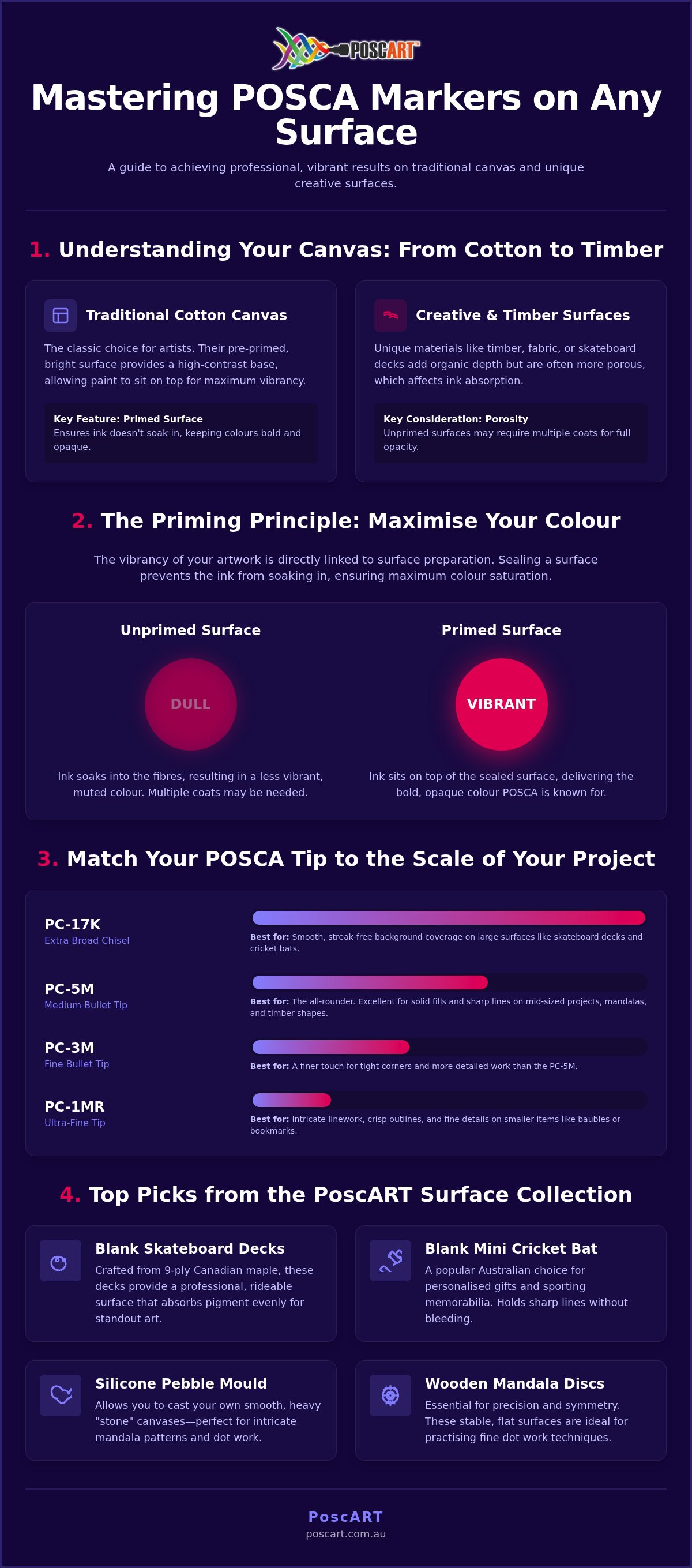
Mastering posca on canvas requires more than just a steady hand; it's about scale. Large projects like Canadian maple Skateboard Decks or cricket bats demand the PC-17K Extra Broad Chisel Tip for smooth, streak-free background coverage. Using a small nib on expansive areas often leads to visible overlaps and uneven pigment. For mid-sized projects, the POSCA PC-5M Medium Bullet Tip remains the gold standard. It provides enough flow for solid fills while maintaining a sharp point for mandalas or geometric patterns on timber shapes.
On the other end of the spectrum, ultra-fine tips like the PC-1MR are essential for intricate linework on items like Papier Mache Baubles or personalised bookmarks. Mixing these sizes on a single piece of posca on canvas art creates professional visual depth. You can use a broad marker for the base and an ultra-fine tip for crisp outlines that pop. When creating permanent works, it's reassuring to know the Archival Quality of Acrylics ensures your pigment stays vibrant for years.
The Best POSCA Markers for Fine Detail and Bold Fills
Choosing between the PC-3M and PC-5M often depends on your specific canvas size. While the PC-3M offers a finer touch for tight corners, the PC-5M provides superior coverage for standard canvas work. You can explore the differences in our PC-5M vs PC-3M comparison. For artists working on vertical displays, the POSCA MOP’R is perfect for creating controlled, expressive drips. When you're cutting in edges on 3D wooden animal shapes, a medium bullet tip offers the best control. If you're ready to start your next project, explore our unique range of drawing surfaces to find your perfect match.
Top Picks from the PoscART Surface Collection
PoscART offers more than just the markers; we provide the unique foundations that make your artwork stand out. For artists looking to move beyond traditional frames, our collection features premium surfaces that transform posca on canvas techniques into functional, high-end pieces. The Blank Skateboard Decks (31 x 8 Inch) are a prime example. Crafted from 9-ply Canadian maple, these decks provide a professional, rideable surface that absorbs pigment evenly. If you're creating personalised gifts or sporting memorabilia, the Blank Mini Cricket Bat (38cm) is a popular Australian choice that holds sharp lines without bleeding.
Creative possibilities expand even further with our specialised tools. Artists who enjoy a tactile, three-dimensional experience can use the PoscART 3-Shaped Silicone Pebble Mould. This allows you to cast your own "stone" canvases using Plaster of Paris, resulting in a smooth, heavy base perfect for intricate patterns. For those focused on precision and symmetry, our DIY Wooden Mandala Painting Kit Discs are essential. These discs provide a stable, flat surface for practising the fine dot work that makes posca on canvas art so visually striking.
Sealing and Caring for Your Finished POSCA Artwork
Protecting your work is vital, especially for items like skateboards or coasters that endure physical handle and UV exposure. Choosing the right sealant prevents your hard work from fading or scratching over time. We recommend using a water-based spray varnish rather than a solvent-based one to avoid smudging your design, as noted in our Surface Guide. Before applying any protective coat, follow this quick checklist:
- Ensure the ink is touch-dry, which typically takes 10 to 20 minutes.
- Wait at least 24 hours for the pigment to cure fully on the surface.
- Apply two light mist coats rather than one heavy, saturated layer.
This steady, professional approach ensures your creations remain vibrant and durable for years.
Elevate Your Creative Projects Today
Achieving professional-quality posca on canvas results is a journey that begins with the right foundation. You've learned how critical surface preparation is for vibrancy and how matching your nib size to the project's scale ensures a clean, streak-free finish. From traditional cotton duck to unique timber shapes, the possibilities for your next masterpiece are truly endless. As a family-owned and operated genuine POSCA specialist, PoscART provides the high-quality tools and expert guidance needed for every Australian artist to succeed. We offer reliable national shipping to get supplies into your hands quickly. Don't let a blank surface stay empty for long. Browse the full Surfaces & Craft Materials collection at PoscART and find the perfect canvas for your unique vision. It's time to let your creativity flow.
Frequently Asked Questions
Do I need to prime a canvas before using POSCA markers?
While most store-bought canvases are pre-primed, adding extra layers of gesso is highly recommended for posca on canvas projects. This creates a smoother foundation that prevents the ink from soaking into the fabric fibres. A well-prepared base ensures your colours remain vibrant and opaque, while also protecting your marker nibs from the rough, abrasive texture of the raw canvas.
How do I make POSCA permanent on a calico bag?
To secure your design on a calico bag, you should heat-set the ink once it's completely dry. Turn the bag inside out and iron the reverse side of the decorated area using a medium heat setting without steam. This simple process helps the pigment bond with the fabric fibres, making your custom creation more resistant to light washing and regular daily use.
Can I use POSCA markers on a rideable skateboard deck?
You can certainly use these markers on a rideable deck, but proper sealing is vital for longevity. Since skateboards face intense physical wear and friction, your artwork will scratch off quickly without a protective layer. Apply several thin coats of a water-based spray varnish to create a durable shield that preserves your design while you're out at the park.
Will POSCA markers fade on a wooden surface if kept outside?
Harsh Australian UV rays will eventually cause pigment to fade if it's left unprotected outdoors. For wooden signs or garden decor, you must use a sealant with integrated UV protection. Applying a quality water-based spray varnish will significantly extend the life of your posca on canvas or timber projects by blocking damaging sunlight and moisture from the elements.
General Information
This article is provided as general information only to help customers compare and choose POSCA markers, acrylic markers, art supplies, creative tools and related products. Product details, colours, finishes, surface suitability, availability, pricing and usage results may vary. Always check the individual product page, manufacturer information, age guidance, surface instructions and safety recommendations before purchasing or using a product.