

Choose fabric paint pens by the job: POSCA PC-3M for fine outlines, POSCA PC-5M for medium-sized motifs, and POSCA PC-8K for broad lettering. For fabric designs, follow POSCA’s textile preparation and fixing instructions, then test the finished result before decorating the whole item.
- Choose fabric paint pens by line width, fabric compatibility and fixing instructions—not colour range alone.
- POSCA PC-3M suits fine outlines; POSCA PC-5M suits medium motifs; POSCA PC-8K suits broad lettering.
- POSCA paint markers need textile-specific preparation and fixing; dry paint alone does not establish wash durability.
- Test your fabric markers on matching material before decorating clothing or a tote bag.
Why fabric preparation matters
A crisp drawing on fabric is only part of the job. You also need a design that works with the weave, the movement of the material and the care instructions attached to the finished item.
PoscART sells POSCA paint markers in different tip formats. This guide compares those formats by drawing task, rather than treating every paint marker as an interchangeable fabric pen.
A paint marker’s suitability for textiles does not mean every fabric design is automatically permanent. Fabric preparation, paint application, fixing and subsequent care all belong in your decision. If you cannot follow the relevant instructions on your chosen fabric, hold off on decorating it.
What to look for in fabric paint pens
Use these criteria before choosing a tip or a colour set:
- Textile instructions: Look for manufacturer guidance covering fabric preparation, application and fixing. General surface claims are not a substitute.
- Line width: Match the tip to the smallest meaningful part of your design, such as lettering, a flower outline or a border.
- Fabric texture: Test on the same material. A smooth woven tote and a stretchy T-shirt need separate trials.
- Coverage: Choose a tip that suits the area you need to fill, without forcing repeated passes into a small space.
- Colour contrast: Trial the actual colours against the actual fabric. A colour chart does not show the finished result on your garment.
- Care compatibility: Check whether the fabric’s care label permits the fixing method specified by the marker manufacturer.
A large palette cannot solve a mismatch between the marker and the material. Start with the fabric and the drawing task; choose colours afterwards.
Fabric paint pen options at a glance
These are numbered picks by job, not a ranking of retailers or a claim that one marker suits every textile project.
| Paint marker | Suited to | Useful feature | Key limitation |
|---|---|---|---|
| POSCA PC-3M | Fine outlines and smaller lettering | Fine bullet tip | Filling broad areas takes repeated strokes |
| POSCA PC-5M | Medium motifs, dots and everyday drawing | Medium bullet tip | Not the choice for the smallest details or broad backgrounds |
| POSCA PC-8K | Broad lettering and graphic shapes | 8mm chisel tip | Requires more room than a fine tip for controlled detail |
None of these tip choices removes the need to follow POSCA’s textile instructions. The table helps you choose how to draw; your fabric test determines whether to proceed.
1. POSCA PC-3M: pick for fine outlines
The POSCA PC-3M has a 0.9–1.3mm fine bullet tip. Choose this format when your design depends on smaller shapes, narrow outlines or lettering that needs space between its strokes.
For a fabric project, sketch a simple floral border, a small geometric motif or a short word at its final size. That trial shows whether the line remains clear on the weave without turning the whole project into a coverage exercise.
POSCA PC-3M pros:
- Fine bullet format suits detail-led drawing.
- Useful for outlining shapes before adding larger areas of colour.
- Suits a design built from small, separate marks.
POSCA PC-3M limitations:
- Broad backgrounds require many passes.
- Fine details still depend on the fabric texture; a finer tip does not correct a rough weave.
The PC-3M bundle contains 45 markers in the fine bullet format. Choose that bundle for its palette only if your project calls for that range; more colours do not change how the tip handles.
Suited to: Small motifs, fine outlines and compact lettering on a tested fabric sample.
Verdict: Choose POSCA PC-3M for detail-led designs; hold until your textile test passes.
2. POSCA PC-5M: pick for medium motifs
The POSCA PC-5M has a 1.8–2.5mm medium bullet tip. It suits drawings where the shapes need more substance than a fine outline, but the design does not call for broad chisel strokes.
Try the format for a simple flower, repeated dots, a bold border or medium-sized lettering. Keep the first design uncomplicated so you can judge the line, the fill and the feel of the painted material separately.
POSCA PC-5M pros:
- Medium bullet format suits motif-based drawing.
- Useful for combining outlines and modest areas of colour.
- Suits repeated dots and rounded marks.
POSCA PC-5M limitations:
- Small lettering needs more space than a fine-tip design.
- Large backgrounds still require repeated strokes and careful application.
The PC-5M gift tin contains 20 markers with medium bullet tips. Its colour selection and storage format are separate considerations from textile performance: test the chosen colours on your fabric before committing to the design.
Suited to: Medium-sized motifs, dots and drawings with a mix of lines and filled shapes.
Verdict: Choose POSCA PC-5M for medium motifs; skip it when tiny detail is the main task.
3. POSCA PC-8K: pick for broad lettering
The POSCA PC-8K uses an 8mm chisel tip and is available in 35 colours. Choose it for broad lettering and graphic shapes.
A chisel format lets you work with the broad face or change the nib angle for different marks. Practise those movements on matching fabric before attempting a finished word; the weave can interrupt a stroke that looks straightforward on paper.
POSCA PC-8K pros:
- Broad chisel format suits larger graphic shapes.
- Useful for lettering that deliberately shows wide strokes.
- Gives you a different mark-making format from a bullet tip.
POSCA PC-8K limitations:
- Broad marks leave less room for small corrections.
- Narrow outlines and compact lettering call for a finer format.
Do not choose a broad tip simply to finish faster. Choose it because broad strokes belong in the artwork, then use your sample to check how much paint the fabric receives.
Suited to: Large lettering, broad borders and graphic shapes with room around each stroke.
Verdict: Choose POSCA PC-8K for broad graphic work; skip it for small lettering.
Choose a set after choosing the drawing task
A bundle is useful when its tip format and palette match your project. It is not a substitute for testing the fabric. The following sets support the fine-detail and medium-motif approaches described above.


For a focused project, write down the colours your artwork actually needs. A limited palette also makes your test easier to assess: you can compare each chosen colour against the fabric rather than sampling a whole set without a plan.
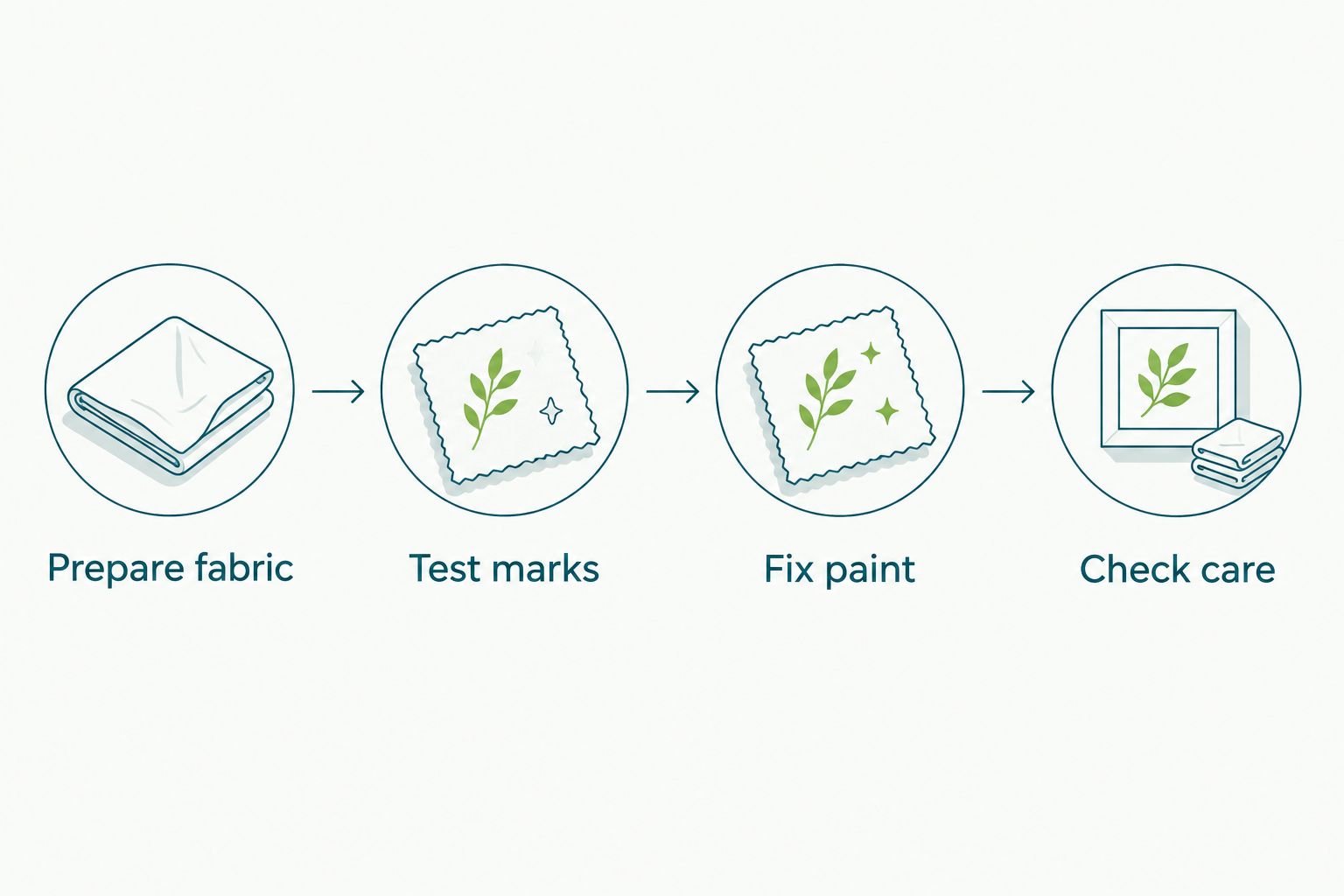
How to test a fabric design
Use matching fabric and reproduce the intended process, not just a quick colour swatch. A useful test includes the same preparation, paint application, fixing method and care routine you intend to use on the finished item.
Prepare fabric
Read the fabric care label and the marker manufacturer’s textile instructions before drawing. Prepare the fabric as directed, let it dry and work on a flat area without stretching the material out of shape.
Place a suitable barrier between fabric layers when decorating a garment or bag. That keeps the working surface separate from the layer underneath while you check how the paint behaves.
Test marks
Make an outline, a filled shape and a short piece of lettering on your sample. Use the actual colours and tip format intended for the project.
Inspect the edges and the reverse of the fabric. If the mark spreads beyond the outline, loses definition or passes through more than expected, change the design or application before continuing.
Fix paint
Let the paint dry completely. For a garment, turn it inside out, place a cloth between the iron and the fabric, and use a dry iron without steam for a couple of minutes, as described on the PC-5M gift tin product page. Use this method only when the fabric care label permits ironing; follow POSCA’s textile fixing instructions for your material.
If the instructions conflict with the garment’s care requirements, choose another project rather than improvising. Touch-dry paint and a correctly fixed textile design are different stages.
Check care
Care for the sample according to the applicable instructions, then inspect it again. Check colour, edges, flexibility and any change in the fabric’s feel.
Keep the sample as a reference. It records the combination you actually used, which is more useful than assuming a result on another fabric will transfer to this one.
Match the design to the fabric
A tote bag, a T-shirt and a fabric patch are different drawing surfaces. Treat each as a separate project, even when you use the same marker and colours.
- Woven bags: Trial the design on matching material and keep the surface flat while drawing. Check how the weave affects outlines.
- Stretch garments: Assess the painted sample both relaxed and gently stretched. A design that looks clear when flat still needs to work with movement.
- Dark fabric: Test contrast with the actual colours. Do not assume the appearance of a marker swatch on white paper predicts the result.
- Textured fabric: Simplify fine details if the surface interrupts the line. Larger shapes are easier to assess than densely packed lettering.
Avoid building the whole design around an untested effect. If a particular colour, outline or filled area is essential, include it in the sample before drawing on the finished item.
How these picks were organised
The picks follow the drawing tasks in the comparison table: fine outlines, medium motifs and broad lettering. The PC-3M fine bullet tip draws 0.9–1.3mm lines, the PC-5M medium bullet tip draws 1.8–2.5mm lines, and the PC-8K has an 8mm chisel tip. These recommendations match drawing tasks, not comparative wash-test results.
Fabric compatibility, fixing instructions and the finished sample take priority over palette size. This keeps the choice practical: select a drawing format first, then establish whether the whole process works on your material.
Which fabric paint pens should you choose?
Start with POSCA PC-5M when your design uses medium motifs; choose POSCA PC-3M when fine outlines dominate. Use POSCA PC-8K when broad lettering is part of the design, rather than trying to make a medium tip cover a large graphic area.
For readers choosing through PoscART, the useful decision is the tip format—not the size of the bundle. PC-3M, PC-5M and PC-8K suit textile designs; prepare and fix the fabric as described above, without promising permanent or wash-proof results.
FAQ
Can I use POSCA paint pens on fabric?
POSCA PC-3M, PC-5M and PC-8K suit fabric designs. Place card between layers, let the paint dry completely and follow the textile fixing steps above; test matching material before decorating the finished item.
Are fabric paint pens permanent as soon as they dry?
Dry paint alone does not establish a permanent, wash-durable fabric design. Complete the marker’s specified fixing process and assess a sample using the intended care routine.
Which POSCA tip should I choose for fine fabric outlines?
Choose POSCA PC-3M for a fine bullet-tip approach to outlines and smaller lettering. Test the final design size on matching fabric because the weave affects how clearly the line appears.
Should I choose POSCA PC-5M or PC-8K for fabric lettering?
Choose POSCA PC-5M for medium-sized lettering and POSCA PC-8K for deliberately broad chisel strokes. Practise the lettering at its finished size before drawing on the garment or bag.
Do I need to heat-set POSCA on fabric?
Drying alone is not the fixing stage. The PC-5M gift tin product page describes turning a garment inside out, placing a cloth between the iron and fabric, and using a dry iron without steam for a couple of minutes; use this only if the fabric care label permits ironing.
Can I use fabric paint pens on a stretchy T-shirt?
PC-3M, PC-5M and PC-8K suit fabric artwork, but that does not establish durability on every stretch garment. Test matching stretch fabric through the preparation, fixing and care process, then inspect it relaxed and gently stretched.
How do I stop paint reaching the other side of a tote bag?
Place a suitable barrier between the fabric layers before drawing. Test your application on matching fabric and check the reverse so you understand how the paint behaves.
Do I need a large colour set for a fabric project?
No: choose the colours your design needs after selecting the tip format. A larger set expands the palette but does not establish fabric compatibility or wash durability.
One last thing
Draw the lettering at its finished size before you choose a marker. A design enlarged on a screen can conceal how little room exists between strokes on the actual fabric.
Choose the tip around the smallest essential detail, then test the whole process. That simple check prevents a broad marker, a crowded design and an unsuitable fabric from becoming the same problem.


